Mirroring My Spotify Playlists to Apple Music, YouTube Music, and Jellyfin
How I built an always-on, one-way playlist mirror that keeps my Spotify playlists synced to Apple Music, YouTube Music, and a Jellyfin-ready download folder, with ISRC-first matching, Unicode-aware fuzzy fallbacks, date-added ordering, and destructive-removal safety rails, all in Python and runnable from Docker or Task Scheduler.

I curate playlists on Spotify, but I listen everywhere else: Apple Music in the car, YouTube Music when a track only exists as some indie upload, and a Jellyfin server at home when I want the files to be mine. Keeping one playlist identical across all four by hand is a chore you do once and abandon. So I built spotify-playlist-mirror-sync. It's an always-on, one-way mirror where Spotify is the source of truth. Add a song on Spotify and it shows up everywhere in date-added order; remove one and it disappears everywhere, behind enough safety rails that a bad API response can't nuke a playlist. ISRC-first matching, Unicode-aware fuzzy fallbacks, optional Jellyfin-ready downloads, Docker or Task Scheduler. Python, MIT.
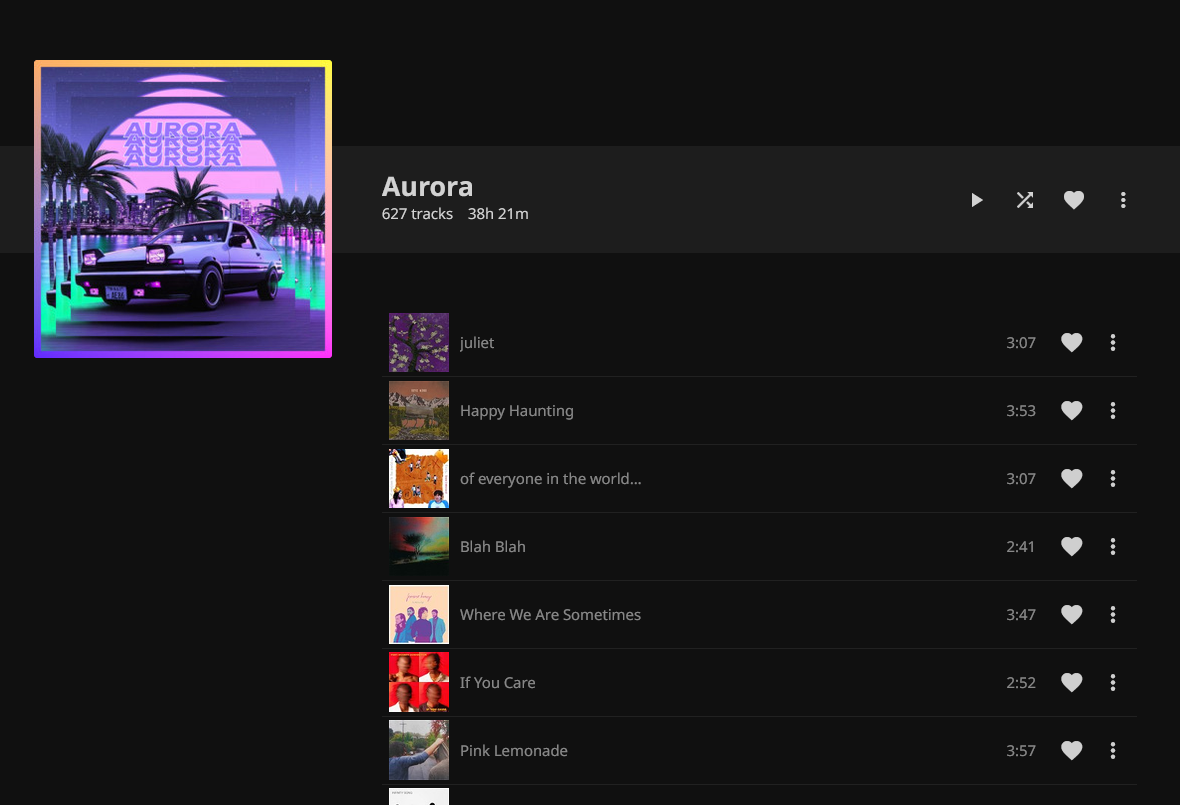
One of my Spotify playlists, mirrored track for track and playing outside Spotify.
One Source of Truth
The existing tools in this space (Soundiiz, TuneMyMusic) do one-shot transfers or append-only sync. They add tracks; they rarely remove them. Over months your mirrors drift: a song you deleted from Spotify lingers on Apple Music forever, and there's no clean way to reconcile the two.
The fix was to stop thinking of it as sync and start thinking of it as a mirror. One direction. Spotify is canonical, and every other service reflects it. That makes removals a first-class operation instead of an afterthought, so the mirror actually matches, subtractions included.
This project actually started out syncing the other way, Apple Music to Spotify, before I flipped it. Spotify's read-only API and its playlist snapshot_id model make it the better source of truth: I can watch it for changes cheaply and never risk writing to it by accident.
What One Pass Does
Every pass, for each playlist name that also exists on Spotify, the flow is the same:
Playlists pair by name, and a missing target is auto-created with Spotify's name and description copied over. Apple and YouTube Music reconcile concurrently, but writes within a service stay sequential and rate-limit-friendly, with jittered pacing and exponential backoff on 403/429.
Additions go in oldest-first on purpose. Appending one track at a time in added-at order keeps every mirrored playlist sorted by date added, newest last, exactly like the Spotify original.
Everything hangs off a single MirrorTarget interface and a shared mirror_pair loop. Apple Music and YouTube Music are just two implementations of the same contract, so all the diffing, ordering, and guarding lives in one place.
Matching Is the Hard Part
The hard problem is deciding when two entries are the same song across catalogs that mostly don't share a key. The pipeline uses the same hierarchy the cross-service tools (TuneLink, MusicBrainz) settled on: hard identifier, then search, then fuzzy score.
- Cached link. Once a Spotify track resolves to an Apple catalog ID or a YouTube
videoId, that link is stored and reused. It survives later title drift and makes steady-state passes nearly free. - ISRC. Exact recording identity wherever the service exposes it (Apple does).
- Scored search. RapidFuzz
token_set_ratio(order-, subset-, and decoration-tolerant) plus Jaro-Winkler, run over both the raw and romanized (anyascii) title and artist, anchored by duration.
That last stage absorbs the real-world mess, none of it hardcoded:
| Drift | Example | Handled by |
|---|---|---|
| Multi-artist credits | Arijit Singh, Ved Sharma, … ↔ Arijit Singh | subset-tolerant token_set_ratio |
| Title decoration | Tri ↔ Popeye (Bangladesh) - Tri (ত্রি) Official Music Video | decoration-tolerant score + duration anchor |
| Transliteration | Камин ↔ Kamin, নেশার বোঝা ↔ Neshar Bojha | anyascii romanization |
| Video-only track | Bangla/indie/OST upload with no catalog song | YouTube videos filter fallback |
The duration anchor is what makes the looser, decoration-tolerant title match safe. It lets the score accept subset and decoration differences without over-accepting, so a Runaway - Piano Version or a wrong-artist cover whose length disagrees gets rejected even when the titles look close. Loose title matching without a length check is how you silently mirror the wrong recording.
There's a known limit. CJK romanizes to a Chinese reading, so kanji/kana titles that a service only stores in native script can still miss. When nothing clears the bar the track is reported (x Not on …) and skipped, never guessed.
Removals Are Destructive, So the Code Is Paranoid
A wrong add is easy to undo; you just delete the track. A wrong remove silently drops a song you wanted, and you might not notice for weeks. So the entire removal path is guarded, and it's the part of the code I'm most careful about:
| Guard | What it prevents |
|---|---|
| Dry run by default | Any write at all without an explicit --execute |
| Empty-snapshot guard | A transient "Spotify returned 0 tracks" from emptying a live target |
MAX_REMOVALS cap | A runaway pass mass-deleting; over the cap, removals skip and log |
MAX_ADDS cap | One-burst backfills tripping bot detection; overflow just continues next pass |
| Fuzzy removal protection | Deleting a target track that plausibly is a Spotify track (feat.-credit drift) |
| Net-loss protection | Dropping a song that has no match on that service to replace it (~ held in the log) |
| Fail-closed tokens | Partial deletes when an Apple token expires mid-pass; any 401/403 aborts the pass |
None of it is clever, which is fine. A delete path running unattended against a library you care about should be boring and over-cautious.
The Local Mirror: Files You Own
The optional download mirror is what makes this more than a playlist bridge. Point DOWNLOAD_DIR at your music root and each --execute pass runs spotDL to keep a local copy of every synced playlist. It's true mirroring here too: new tracks download, removed tracks get deleted locally. The layout is Jellyfin-ready:
<DOWNLOAD_DIR>/
  <Playlist>/
    <Playlist>.m3u8         # tool-generated, newest-first
    cover.jpg               # Spotify playlist cover, highest resolution
    <AlbumArtist>/
      <Album>/
        Artist - Title.mp3  # tagged + cover art embedded
The .m3u8 is written by the tool, not spotDL, in date-added order with newest at the top, so Jellyfin shows your latest additions first the way Spotify does. Each file's modified-time is also stamped to its added-at date, so a Date-Modified sort matches.
One optimization was worth the effort. spotDL spends minutes re-fetching and re-matching a whole playlist before it reports a single skip, and it does that even when nothing changed. So a playlist whose Spotify snapshot_id hasn't moved since its last clean download is skipped entirely, with no spotDL invocation at all. Only a first-time or changed playlist pays that cost.
One caveat: downloading audio this way sits outside Spotify's ToS. It's for personal use of content you already have access to, so it's your call.
Near-Instant Re-Runs
An always-on mirror only works if the common case, nothing changed, is cheap. Everything resolvable is cached: per-service resolve caches (ISRC and search results, misses included) and a spotify_tracks_cache.json keyed by snapshot_id. That key matters, because Spotify's snapshot_id changes exactly when the playlist does. Unlike a time-based TTL, there's no staleness window to reason about.
On top of that, song_cache.db holds the hard-identifier links and a sync_state table. After a fully clean pass, each pair's snapshot_id is recorded, and while it's unchanged the pair is skipped outright. Dry runs never skip or write state, so a plain uv run main.py always shows the full picture before you commit to anything.
Keeping It Always-On
Two ways to keep it running: a Docker Compose loop that runs --execute every SYNC_INTERVAL, or a Windows Task Scheduler task firing a one-shot pass every 15 minutes. Don't run both. Two mirrors racing each other can briefly duplicate adds.
Auth is low-ceremony. Spotify is a one-time OAuth with the read-only playlist-read-private scope, so it never writes to Spotify at all. Apple needs nothing but the two headers you copy out of music.apple.com's network tab, with no Apple Developer account required. When a token expires, the pass logs exactly which one to re-capture.
Adding Another Service Is Eight Methods
Adding a service is deliberately small. To support Tidal or Deezer, you subclass MirrorTarget and implement about eight methods (list_playlists, playlist_tracks, track_id, resolve, add, remove, create, is_editable), then register a builder. The diff, the oldest-first ordering, every safety rail, the logging, and the snapshot-skip are all inherited from mirror_pair. Apple Music and YouTube Music are just the first two implementations.
Try It Yourself
The source is on GitHub, MIT-licensed. The default is a dry run: it prints every add and remove it would make and writes nothing, so you can point it at your own library and read the whole plan before it touches a single playlist. Stars, issues, and PRs all welcome.